

Moisture Control
Moisture Control During the International Transport of Natural Pet Chews
Moisture control in shipping is an essential consideration for importers and distributors of natural pet chews. A shipment can leave a warehouse in pristine condition and arrive looking rather less impressive. Sometimes the problem is obvious. Damaged cartons, wet packaging, the unmistakable scent of a container that spent an unfortunate afternoon in a puddle. Sometimes the betrayal is silent. Everything looks perfectly normal until someone opens the doors.
Moisture is one of the less visible risks in international freight. It deserves far more attention when transporting natural materials.
For importers and distributors of natural pet products, the transit between dispatch and delivery is not simply a matter of distance. Temperature changes, humidity, condensation, packaging and handling all dictate the conditions in which goods travel.
Let us be clear. A closed shipping container is not a climate-controlled sanctuary. It is a steel box that bakes in the Mediterranean sun and shivers in the North Sea.
When people think about moisture damage, they tend to imagine rain, leaking roofs or cartons submerged in floodwater. There is another, far more common culprit: condensation.
Moisture Control in Shipping: Understanding Container Sweat
A shipping container can develop condensation without a single drop of external water entering it. The phenomenon is commonly known as container sweat, and it is a thoroughly recognised issue in international cargo transport.
The physics are unforgiving. Air contains water vapour. When the temperature falls sufficiently, that vapour condenses into liquid water. The temperature at which this happens is the dew point.
During international transit, containers encounter shifting climates. Warm, moisture-laden air inside a container cools during the voyage, causing condensation to form on internal surfaces. Water droplets collect on the ceiling and walls before eventually raining down onto the cargo. Packaging materials, cartons and wooden pallets can also contribute their own moisture to this enclosed environment.
The International Maritime Organization, International Labour Organization and United Nations Economic Commission for Europe address these exact risks in their Code of Practice for Packing of Cargo Transport Units, universally known as the CTU Code.
The crucial distinction is this. A container does not need to leak for moisture to become a problem.
International freight rarely travels through one consistent climate. A container may be loaded in warm conditions, sit in a humid port, cross a cooler maritime environment and subsequently arrive somewhere with entirely different temperatures. Every change introduces variables.
When the internal temperature falls, condensation develops if the air reaches its dew point. The volume of moisture involved depends on initial humidity, temperature variations, ventilation and the moisture content of the cargo and packaging itself.
For businesses transporting natural materials, the consequences demand particular attention. Depending on the product and exposure conditions, moisture may affect:
- Packaging integrity: Cardboard absorbs moisture and loses structural strength.
- Labels and presentation: Adhesives weaken, labels lift and packaging loses its professional appearance.
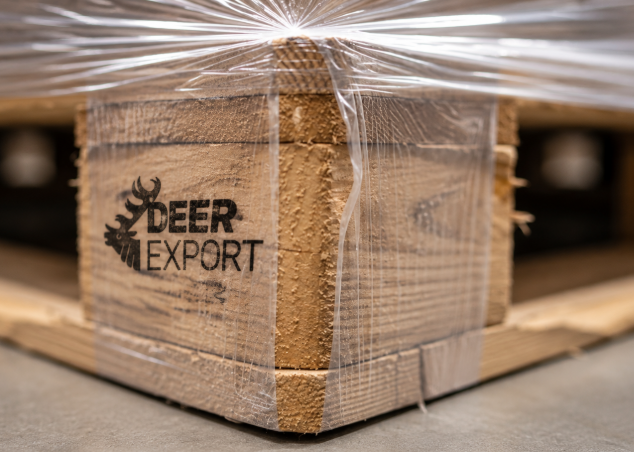
- Pallet stability: Wooden pallets contain moisture and actively contribute to the overall humidity within a sealed container.
- Product condition: Organic materials respond differently to inappropriate moisture exposure, depending on their composition, initial moisture content and handling history.
This last point matters. Natural materials are not interchangeable simply because they share a product category. Deer antlers, tendons and animal hides possess entirely different physical characteristics. Their storage and transport requirements must be considered individually, not treated as a universal set of instructions. Understanding the material is the starting point for understanding how to transport it.
Packaging often receives considerable attention during product development. Colours, labels, dimensions and shelf appeal all have their place, particularly when supplying private-label brands. But international distribution introduces another non-negotiable consideration: protection.
PACKAGING
Packaging is part of the logistics arrangement. It is not simply the final decorative decision before a product leaves the warehouse.
The right solution depends on the characteristics of the material, the type of packaging, the expected voyage and the conditions under which the goods will be handled. For professional buyers, several questions are worth asking before confirming a shipment:
- Is the packaging appropriate for the product? Different natural materials require different considerations.
- Can it withstand the transit? Packaging must be suitable for the expected handling, stacking and transport conditions.
- Are the pallets appropriate? Supporting materials, including wooden pallets, must be considered as part of the cargo environment.
- Have moisture risks been assessed? Temperature changes and foreseeable humidity exposure should not be overlooked.
- Are responsibilities clearly established? Supplier, freight forwarder and carrier responsibilities must be understood before the goods are dispatched.
None of these questions requires an elaborate logistics department. They require a little foresight and a willingness to look beyond the product catalogue.
International buyers are accustomed to comparing prices. It is part of the job. Freight quotations are no exception. Transit times, routes, carrier options and costs are placed side by side, and the figures are evaluated against the available budget.
There is nothing wrong with seeking competitive transport rates. The problem begins when the price becomes the only criterion. A quotation tells you what a particular transport service costs. It does not, by itself, tell you whether the entire logistics arrangement is appropriate for the goods being transported. Effective moisture control in shipping requires buyers to consider more than the freight rate. Packaging suitability, loading conditions and the physical characteristics of the cargo all influence the overall transport arrangement.
A meaningful comparison should consider packaging requirements and suitability, loading and handling conditions, expected transit times and route, the physical characteristics of the cargo, potential exposure to temperature and humidity changes, and the responsibilities of the parties involved.
A lower freight rate can be a perfectly sensible commercial decision. But saving money on transport while overlooking the conditions affecting the cargo is a rather different calculation. The objective is not to purchase the most expensive shipping option. It is to understand exactly what is being purchased and whether it meets the requirements of the shipment.
In the natural pet products industry, the commercial process involves considerably more than selecting a material and agreeing on a price. Material selection, preparation, packaging, handling, transport and delivery are connected stages of the same supply chain.
At Deer Export, our experience in European natural-material supply has given us a practical appreciation of this relationship. Supplying natural products to international customers means understanding that the material does not exist in isolation from the conditions in which it is prepared, handled and transported.
It also means recognising the limits of what any individual supplier can control. No company can dictate every temperature change, handling operation or environmental condition encountered during an international voyage. What matters is understanding the material, considering the transport arrangement and communicating clearly about the responsibilities involved.
A successful shipment is not simply one that leaves on time or arrives according to the booking schedule. It is one that reaches its destination in a condition appropriate for its intended commercial use.
Because the transit is not separate from the product. It is part of the responsibility that comes with supplying it.
Technical references
- International Maritime Organization (IMO), International Labour Organization (ILO) and United Nations Economic Commission for Europe (UNECE), Code of Practice for Packing of Cargo Transport Units (CTU Code), 2014 edition. A non-mandatory international code of practice covering cargo packing, transport risks and moisture-related considerations.
- International Union of Marine Insurance (IUMI), guidance on humidity management and cargo protection during transport.
*This article discusses general cargo and moisture-management considerations. Specific storage and transport recommendations should be established according to the characteristics of each material and the conditions of the shipment.