

What Makes a Natural Pet Product Commercially Interesting?
What Makes a Natural Pet Product Commercially Interesting?
A natural pet product can have an appealing story, an attractive appearance and a place in a growing category. But none of those things automatically makes it a commercially interesting product.
For pet brands, retailers and distributors, the real question is more demanding: does the product solve a problem, meet a genuine demand and make commercial sense?
In the natural pet products market, where consumers are increasingly attentive to ingredients, materials and product origins, the opportunity is not simply to offer something natural. It is to understand what makes that product relevant, distinctive and viable.
At Deer Export, we believe commercial value begins long before a product reaches the shelf.
1. A real market need, not just a good story
Natural products often come with compelling narratives. Nature, authenticity, craftsmanship and sustainability can all contribute to a product’s appeal.
But a good story cannot carry a product indefinitely.
A commercially interesting product responds to a recognisable need. It offers something that buyers can explain, retailers can position and consumers can understand.
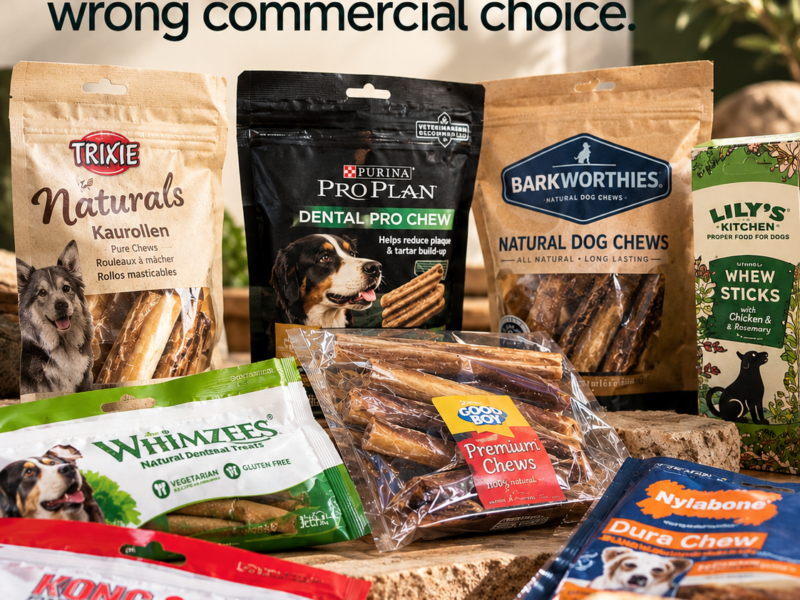
For natural dog chews, that may mean a distinctive material, a particular chewing experience, a useful product format or a clear place within an existing range.
The question is not simply whether a product is natural.
It is why someone would choose it over the alternatives.
2. Differentiation that matters
The pet market is full of products competing for attention. A new item needs more than a different label or a clever name.
Meaningful differentiation can come from the material itself, the product’s format, its intended use, its presentation or the role it plays within a portfolio.
Deer antlers, for example, offer a distinct natural material and can be presented in different formats, including whole and split antlers.
For a buyer, that difference becomes commercially relevant when it helps serve a particular customer segment or creates a clear reason to include the product in a range.
Different is useful only when the difference matters to the buyer.
3. Quality and consistency
A product may attract attention once. A reliable product gives a business a reason to keep buying it.
For professional buyers, quality is not only about how a product looks in a photograph. It also involves consistency between orders, clear specifications and confidence in what is being supplied.
Natural materials come with inherent variation. That makes clear grading criteria, appropriate quality controls and transparent communication particularly important.
For distributors and retailers, consistency helps reduce uncertainty and makes it easier to manage a product portfolio.
A product that cannot be described, assessed and supplied with reasonable consistency is harder to build a dependable business around.
4. Supply reliability
Commercial interest does not end with the first order.
Buyers need to understand whether a supplier can support their requirements over time, communicate clearly and manage expectations around availability, specifications and delivery.
This matters particularly in B2B markets, where a product may be part of a retailer’s wider assortment or a distributor’s supply commitments.
A commercially attractive product with an unreliable supply chain can quickly become a commercial headache.
Availability is part of the product experience, even when the customer never sees the warehouse.
5. A clear place within the product range
A product does not have to stand alone to be commercially valuable.
Sometimes its greatest value comes from how it complements an existing range.
For example, a portfolio of natural dog chews may include deer antlers, tendons and other natural materials, each serving a different role in the assortment.
A well structured range gives buyers options without turning the catalogue into a collection of interchangeable products.
The aim is not to add products for the sake of adding them. It is to create a range that makes sense for the customer, the retailer and the business supplying it.
6. Presentation, packaging and positioning
Commercial value is also shaped by how a product is presented.
Packaging, product information, photography and display all influence how easily a buyer can understand and position an item.
For natural pet products, presentation needs to communicate the product’s identity without making claims that cannot be supported.
A clear product description, appropriate format and coherent visual identity can help a product stand out while making it easier for retailers to introduce it to customers.
Premium positioning, in particular, requires more than premium looking packaging. The product, its quality, its presentation and its commercial proposition need to tell the same story.
7. A viable commercial proposition
A product can attract interest and still struggle to become a sustainable business.
Buyers need to consider purchasing costs, logistics, packaging requirements, expected margins and the price customers are willing to pay.
The relevant question is not simply whether a product can be sold at a high price.
It is whether the product creates enough value for each participant in the supply chain to make the relationship commercially viable.
That includes the supplier, distributor, retailer and ultimately the customer.
A strong product proposition connects perceived value with commercial reality.
8. Compliance and transparency
In the pet products market, trust is not a decorative extra.
Product requirements, documentation, traceability and applicable regulatory obligations can all influence whether a product is suitable for a particular buyer or market.
The specific requirements depend on the product category and destination market. Businesses need to understand those requirements before making claims or committing to supply.
Clear documentation and transparent communication help buyers assess risk and make informed decisions.
A compelling product story should always be supported by what the business can demonstrate.
So, what makes a natural pet product commercially interesting?
There is no single formula.
But commercially interesting products tend to bring several elements together:
-
A clear and recognisable market need
-
Meaningful differentiation
-
Reliable quality and specifications
-
A supply proposition buyers can trust
-
A relevant place within the product range
-
Clear presentation and positioning
-
A viable commercial model
-
Appropriate compliance and transparency
The natural origin of a product may open the conversation.
Its commercial value is what keeps the conversation going.
At Deer Export, we look beyond the material itself. We consider how a product fits into a buyer’s range, how it can be positioned and what makes it relevant to the market it serves.
Because being natural is a characteristic.
Being commercially interesting is a proposition.
And the difference matters.