
Three Animals, Three Antler Profiles
Red Deer, Fallow Deer & Roe Deer: Three Animals, Three Antler Profiles
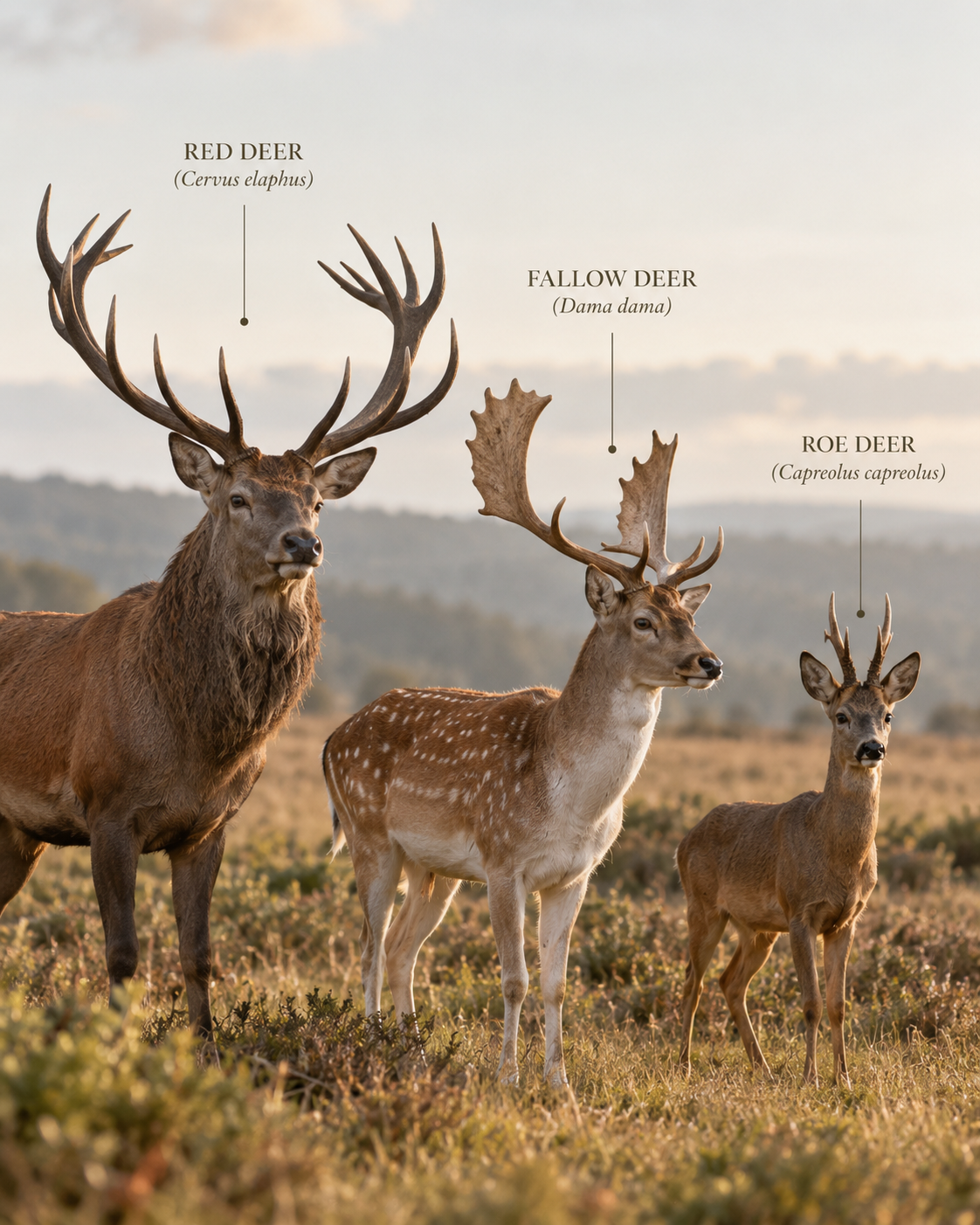
Three species. Three very different antler structures. Red deer, fallow deer and roe deer antlers each have a distinctive shape, size and natural development cycle and understanding those differences is an important part of understanding deer as a natural material.
From the large, highly branched structure of red deer to the broad palmation of fallow deer and the compact, pearled form of roe deer, antlers reflect the species they come from.
Red Deer (Cervus elaphus)
Large, highly branched and unmistakable
Red deer are among Europe’s best-known deer species and produce some of the most impressive antlers in the deer family.
Male red deer — known as stags — develop large antlers with multiple branches and points. As the animal matures, the antlers generally become more developed, making their branching structure one of the easiest ways to distinguish red deer from other species.
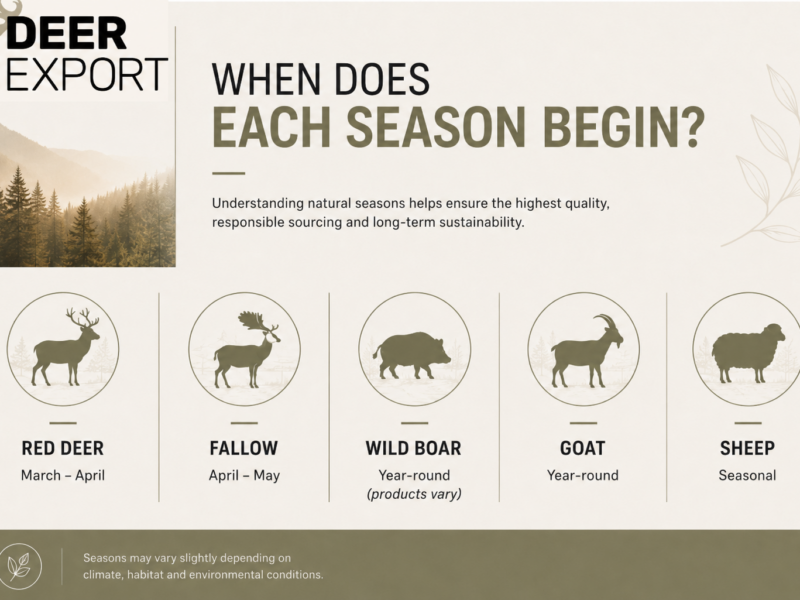
The antler cycle is annual. Red deer stags cast their antlers in spring, grow a new set through the warmer months and typically have clean antlers from around late summer onwards.
The characteristic profile:
- Large overall structure
- Long main beam
- Multiple branches and points
- Strongly developed antler architecture
- Distinctive, highly recognisable shape
For anyone working with deer antler as a natural raw material, red deer represents one of the most recognisable profiles in the category.
Fallow Deer (Dama dama)
Broad, flattened and distinctive
Fallow deer are immediately recognisable by their antlers.
Unlike the branching structure of red deer, mature fallow bucks develop palmate antlers — broad, flattened sections that give the antlers their characteristic appearance.
Fallow is the only deer species in Britain with this distinctive palmate antler structure. The palmation becomes fully developed as the animal matures and can vary considerably between individuals.
The characteristic profile:
- Broad, flattened sections
- Palmate structure
- Strong visual variation between individuals
- Distinctive silhouette
- Different proportions from red deer antlers
This makes fallow antlers particularly easy to distinguish once you know what to look for.
Roe Deer (Capreolus capreolus)
Smaller, compact and highly structured
Roe deer are considerably smaller than red and fallow deer, and their antlers reflect that difference.
Male roe deer — known as bucks — develop relatively small antlers. When fully grown, they typically have three points on each antler, giving them a compact and symmetrical appearance. Some roe antlers are also described as pearled or beaded, referring to the textured nodules that can develop on the surface.
Roe deer also have a different antler cycle from red and fallow deer. According to the British Deer Society, roe bucks typically cast their antlers in November–December, grow them through winter, and have clean antlers from approximately April onwards.
The characteristic profile:
- Smaller overall size
- Compact structure
- Typically three points
- Often highly textured or “pearled”
- Different seasonal cycle from red and fallow deer
Three Species. Three Profiles.
The differences become much easier to see when the three are placed side by side:
| Species | Characteristic antler profile | Typical distinguishing feature |
|---|---|---|
| Red deer | Large and highly branched | Multiple points and long beams |
| Fallow deer | Broad and palmate | Flattened, palm-shaped sections |
| Roe deer | Small and compact | Typically three points |
These aren’t simply different versions of the same material.
They are the result of different species, different biology and different annual growth cycles.
Why antler structure matters
For businesses working with natural deer antler, understanding species differences is more than an exercise in identification.
Natural materials are not manufactured to an identical specification from one production cycle to the next. Species, age, individual animal characteristics and natural growth all contribute to variation.
That is part of what makes natural materials different from synthetic alternatives — and why product knowledge matters throughout the supply chain.
For distributors, manufacturers and retailers, understanding the characteristics of the material can help when assessing product ranges, communicating with customers and making informed sourcing decisions.
The annual antler cycle
One of the most remarkable characteristics of deer is that antlers are temporary structures.
Deer that carry antlers shed and regrow them as part of an annual biological cycle. After being cast, a new set grows beneath velvet before eventually hardening and becoming clean antlers. The timing differs between species.
That means seasonality is built into the material from the beginning.
Red deer, fallow deer and roe deer don’t simply produce different-looking antlers. They also follow different biological calendars.
Understanding those cycles is therefore an important part of understanding natural sourcing.
Natural variation is part of the product
One of the things we find most interesting about natural materials is that no two pieces tell exactly the same story.
Species provides the first distinction.
Then come factors such as age, individual development, environment and natural growth.
The result is a material with genuine variation — rather than a product designed to look natural.
For companies working in natural pet products, that distinction matters.
Natural doesn’t mean identical. It means understanding the material well enough to work with its natural characteristics.
Three animals. Three antler profiles.
Red deer. Fallow deer. Roe deer.
Three species with different biology, different antler cycles and distinctly different structures.
And that is precisely what makes the natural-material category so interesting.
At Deer Export, we believe that good sourcing starts with good knowledge.
The more we understand the material, the better we can understand the products, the markets and the people who work with them.
Natural products · Product knowledge · Responsible sourcing · European supply