
Whole vs Split Deer Antlers
Which Is Right for Your Customers?
When choosing deer antlers for the natural pet chew market, one of the first decisions buyers face is whether to offer whole or split antlers.
Both formats come from the same natural product, but they provide different chewing experiences and can appeal to different types of customers.
For distributors, retailers and private-label pet brands, understanding these differences makes it easier to build a well-balanced product range and give customers clearer guidance.
Whole and Split Antlers: What Is the Difference?
The main difference is straightforward.
Whole antlers retain their natural structure, including the harder outer surface. They are generally positioned as a durable, long-lasting chew and can be particularly suitable for dogs with stronger chewing habits.
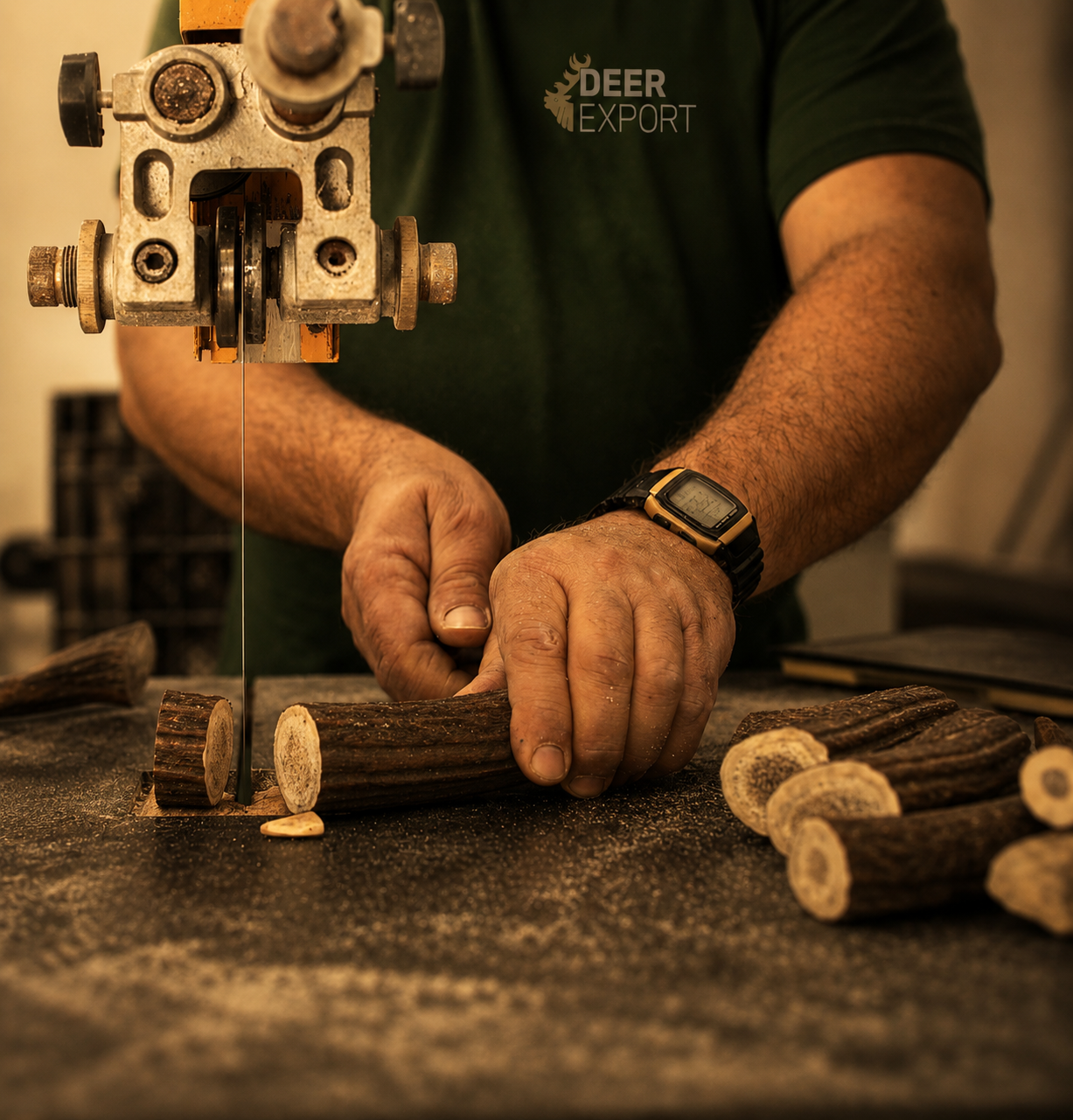
Split antlers are cut lengthwise, exposing the naturally occurring marrow inside. This makes the interior more accessible and can make the product appealing to dogs that are attracted to the taste and texture of the marrow.
Neither format is universally better.
The right choice depends on the intended customer, the dog’s chewing habits and how the product is positioned within a retailer’s range.
Whole Deer Antlers
Whole antlers retain their natural external structure and are valued primarily for their durability.
They can be a strong choice for:
- Dogs with stronger chewing habits
- Customers looking for a long-lasting natural chew
- Retailers positioning antlers as a premium, durable product
- Buyers looking to offer a traditional whole-antler format
Because the marrow is enclosed within the antler, the chewing experience is focused more on the outer surface.
For distributors and retailers, whole antlers can therefore occupy an important position within a range focused on durability and longevity.
Split Deer Antlers
Splitting the antler exposes the naturally occurring marrow inside.
This changes the experience considerably. Rather than having to work through the outer surface to reach the interior, dogs can access the marrow immediately.
Split antlers can therefore be particularly appealing to:
- Dogs that are new to deer antlers
- Dogs that prefer the flavour and texture of the marrow
- Customers looking for easier access to the interior of the chew
- Retailers wanting to offer an alternative to whole antlers
For a pet brand or distributor, split antlers can complement whole antlers rather than compete with them.
Whole vs Split: A Simple Comparison
| Whole Antler | Split Antler | |
|---|---|---|
| Structure | Natural external structure retained | Cut lengthwise |
| Marrow | Enclosed inside | Exposed |
| Main appeal | Durability and longevity | Accessible marrow |
| Typical positioning | Long-lasting premium chew | Accessible natural chew |
| Product range role | Core durable option | Complementary option |
The distinction is not about one format being higher quality than the other.
It is about offering different experiences.
What Should Buyers Consider?
For professional buyers, the decision should go beyond simply choosing one format.
1. Your target customer
Consider who will ultimately purchase the product.
A retailer serving customers looking for long-lasting, durable chews may place greater emphasis on whole antlers.
A retailer whose customers are looking for variety and easier access to marrow may benefit from including split antlers.
2. Your product range
Offering both formats can give customers more choice without requiring an entirely different product category.
A balanced range could include different sizes and both whole and split formats, allowing retailers to serve a wider range of customer preferences.
3. Product presentation
Clear product descriptions are particularly important for natural chews.
Customers should understand whether they are purchasing a whole or split antler and what that difference means for the chewing experience.
Good product education helps reduce confusion and allows customers to make more informed decisions.
4. Consistency
For distributors and private-label brands, consistency matters.
Buyers need confidence that the product they receive will correspond with the specifications and expectations established when the order was placed.
This is particularly important when working with natural products, where variation is an inherent part of the raw material.
Building a More Complete Product Range
Whole and split antlers should not necessarily be viewed as competing products.
They can work together.
A retailer can use whole antlers to provide a durable, long-lasting option while offering split antlers for customers who prefer immediate access to the marrow.
For distributors and private-label brands, this creates an opportunity to build a more versatile range without moving away from the same core natural product.
The key is to understand what each format offers and communicate that difference clearly.
Quality Goes Beyond the Format
Choosing between whole and split is only one part of sourcing premium deer antlers.
Professional buyers also need to consider factors such as:
- Product consistency
- Appropriate sizing
- Reliable supply
- Traceability
- Clear specifications
- Quality expectations
- Supplier communication
A well-defined product range is valuable, but it becomes much more valuable when buyers can rely on consistent quality and clear information from their supplier.
The Right Format Depends on the Right Customer
There is no single answer to whether whole or split antlers are better.
Whole antlers emphasise durability and longevity. Split antlers provide easier access to the naturally occurring marrow.
For distributors, retailers and pet brands, the strongest approach may not be choosing one over the other, but understanding how each format can serve a different customer need.
At Deer Export, we believe that informed product selection starts with understanding the natural characteristics of the product itself.
Because when buyers understand the difference, they can build better ranges, communicate more clearly with their customers and make more confident purchasing decisions.
Whole or split, the goal remains the same: providing a high-quality natural chew that fits the needs of the market.